Fact-Checked Lebanon Misinformation Was Mostly Real, Not AI
Most fact-checked misinformation in Lebanon’s 2026 conflict used real images or videos with false context, not AI-generated content.

Most fact-checked misinformation in Lebanon’s 2026 conflict used real images or videos with false context, not AI-generated content.
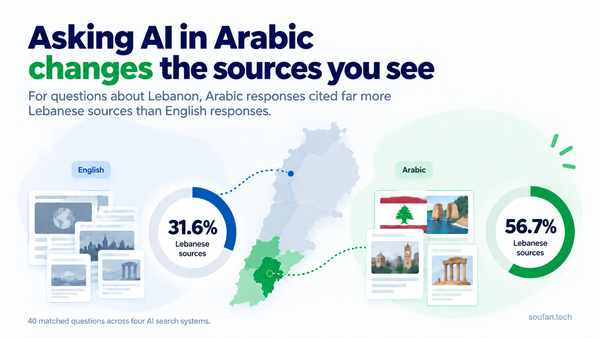
A study of ChatGPT Search, Gemini, Perplexity and Copilot finds that asking the same questions about Lebanon in English or Arabic can lead AI systems to cite very different sources.
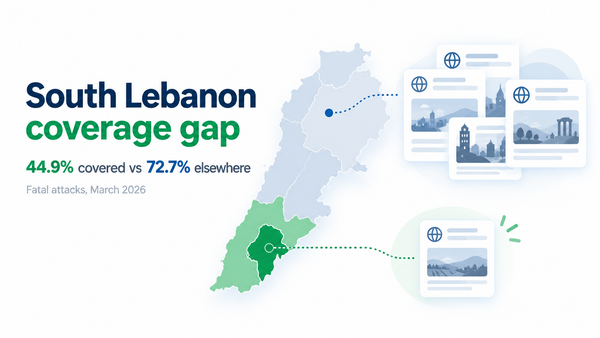
Fatal attacks in South Lebanon and Nabatieh were substantially less likely to receive international English-language news coverage than attacks elsewhere in Lebanon.

Social media can make a small group look much larger than it is. This article explains why visibility, engagement, and public opinion are not the same.
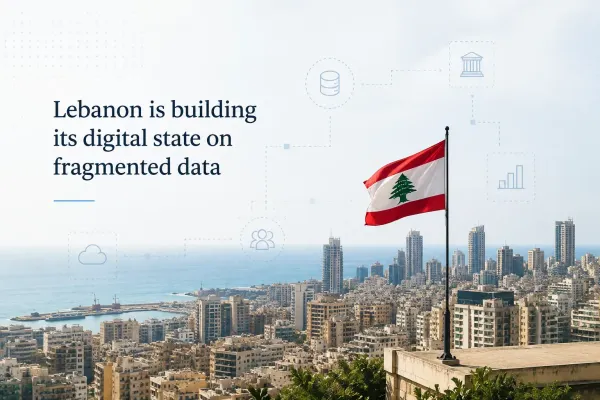
Lebanon is investing in digital government, but disconnected data still limits how well institutions can understand fast-moving social and economic pressures.
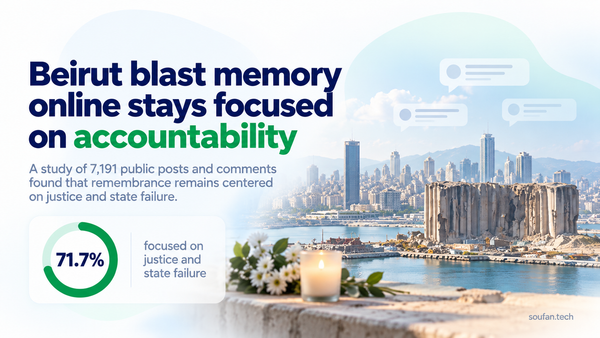
A study of 7,191 X and Reddit records finds that online memory of the Beirut port explosion remains dominated by justice and state failure, suggesting the blast is still remembered as an unresolved political wound rather than a closed tragedy.
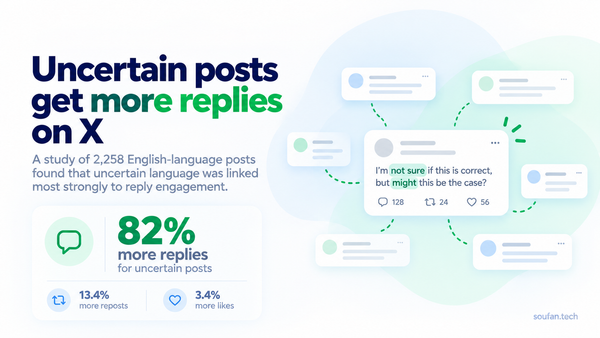
A replication study finds that the uncertainty-reply asymmetry appears in English-language X posts across Federal Reserve policy, inflation, and electoral politics, suggesting uncertain language may invite more replies than certain statements.
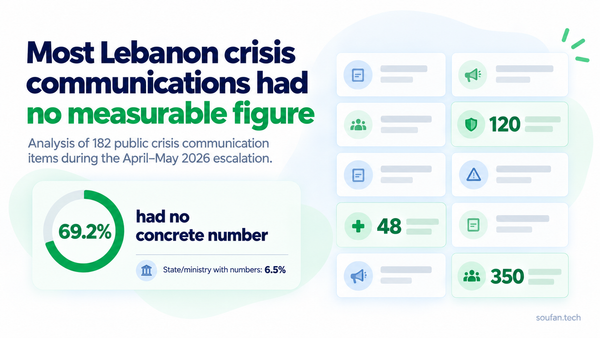
Analysis of 182 Lebanon crisis communications found that nearly 7 in 10 contained no concrete number. State/ministry sources were the least quantified, with only 6.5% including measurable figures.
A small share of narratives drove all repetition on X after the Lebanon ceasefire, concentrating repeated content within a limited set of clusters.
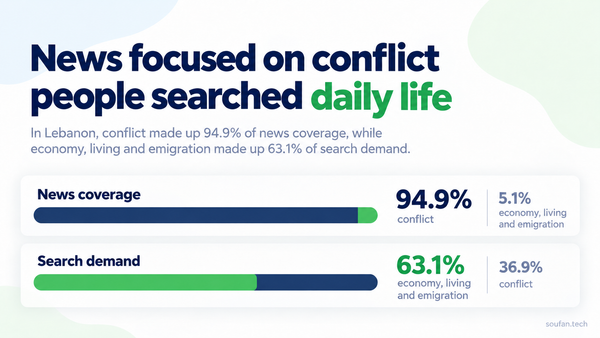
A data-driven comparison of media coverage and Google search behavior in Lebanon reveals a major gap between what news reports and what people seek.
Posts about the ceasefire attracted far more engagement than violation reports in the 48 hours after the Lebanon ceasefire.
Over a third of posts on X repeated existing claims after the Lebanon ceasefire, indicating that narratives spread faster than new reporting.